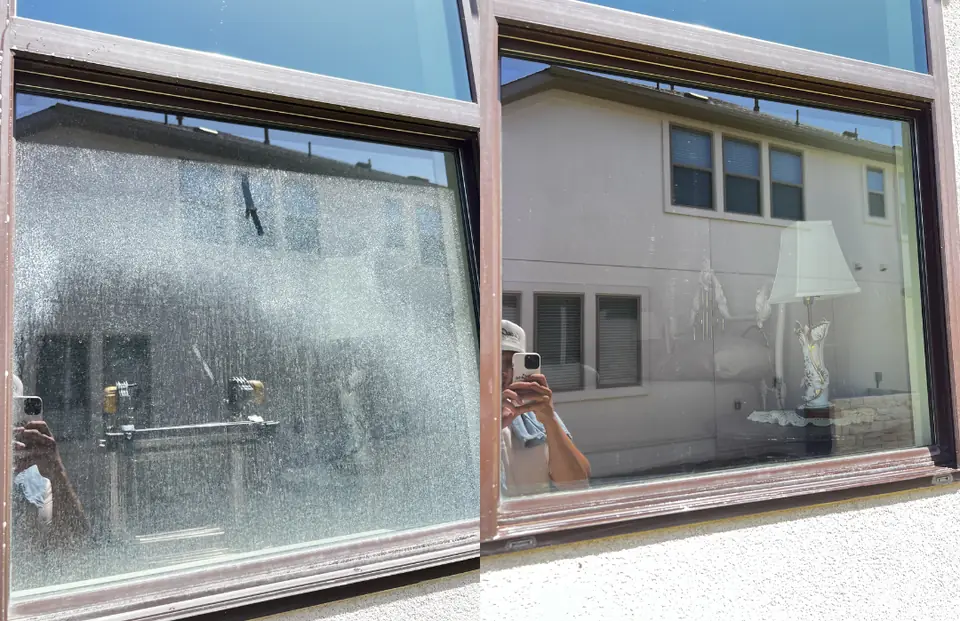
What are hard-water stains on windows?
Hard-water stains are mineral deposits, mostly calcium and magnesium, left behind when hard water evaporates on glass. They show up as white spots, rings, or a cloudy haze, usually on lower windows that sprinklers hit. In Central Texas, where water runs through limestone, they're one of the most common window problems homeowners run into.
The water itself isn't what does the damage. As each droplet dries, it leaves its minerals behind. Every sprinkler cycle adds another layer, and Texas sun bakes those layers on.
How can I tell hard-water spots from etched glass?
Run a clean fingernail across the spot after the glass is wet and wiped. If you feel a raised, slightly rough bump, it's most likely a mineral deposit sitting on the surface, and it can usually be removed. If the glass feels smooth but the cloudy mark is still there, the minerals may have etched into the glass itself. Etching is surface damage, not dirt, and it can't always be fully reversed.
The longer spots sit, the more likely they are to move from the first category to the second. That's the best reason not to put off dealing with them.
How do I remove fresh hard-water spots myself?
Use a mild acid, give it time to work, and rinse with water that won't leave new spots. White vinegar is the usual starting point because its mild acidity breaks down calcium deposits.
What you'll need
- White vinegar and distilled water, mixed about half and half in a spray bottle
- Soft microfiber cloths
- A non-scratch sponge (the kind labeled safe for glass or nonstick pans)
- A squeegee
- Extra distilled water for rinsing
Step by step
- Work in the shade. Clean early in the morning or on a cloudy day. In direct sun, the solution evaporates before it works and leaves its own streaks.
- Rinse off loose dirt first. Wipe or rinse dust and pollen away so you're not grinding grit into the glass.
- Spray the spots generously and let the solution sit for several minutes. For stubborn spots, press a vinegar-soaked cloth against the glass so it stays wet longer.
- Gently work the area with the non-scratch sponge in small circles. Let the acid do the work; don't scrub hard.
- Rinse with distilled water. Tap water will start putting new minerals right back on.
- Squeegee and dry with a clean microfiber cloth, then check the glass from a few angles in daylight.
Repeat once or twice if needed. If a spot hasn't budged after a few rounds, it's either a heavier deposit than vinegar can handle or etching, and more scrubbing won't fix either one.
What should I never use on hard-water stains?
Anything that can scratch the glass or damage the frame. A scratch is permanent, and that's much worse than a spot.
- Steel wool, scouring pads, and abrasive powders. They remove spots by scratching the glass around them.
- Razor blades on glass you're unsure about. Scraping can scratch glass, and tempered glass is especially easy to damage this way. Leave blade work to professionals.
- Mixing cleaning products. Never combine vinegar or other acids with bleach. The fumes are dangerous.
- Harsh acids on frames and sills. Strong descalers can stain stone sills and damage some frame finishes. Protect surrounding surfaces and rinse thoroughly.
- Tap water for the final rinse. In Austin, it just adds a fresh layer of minerals.
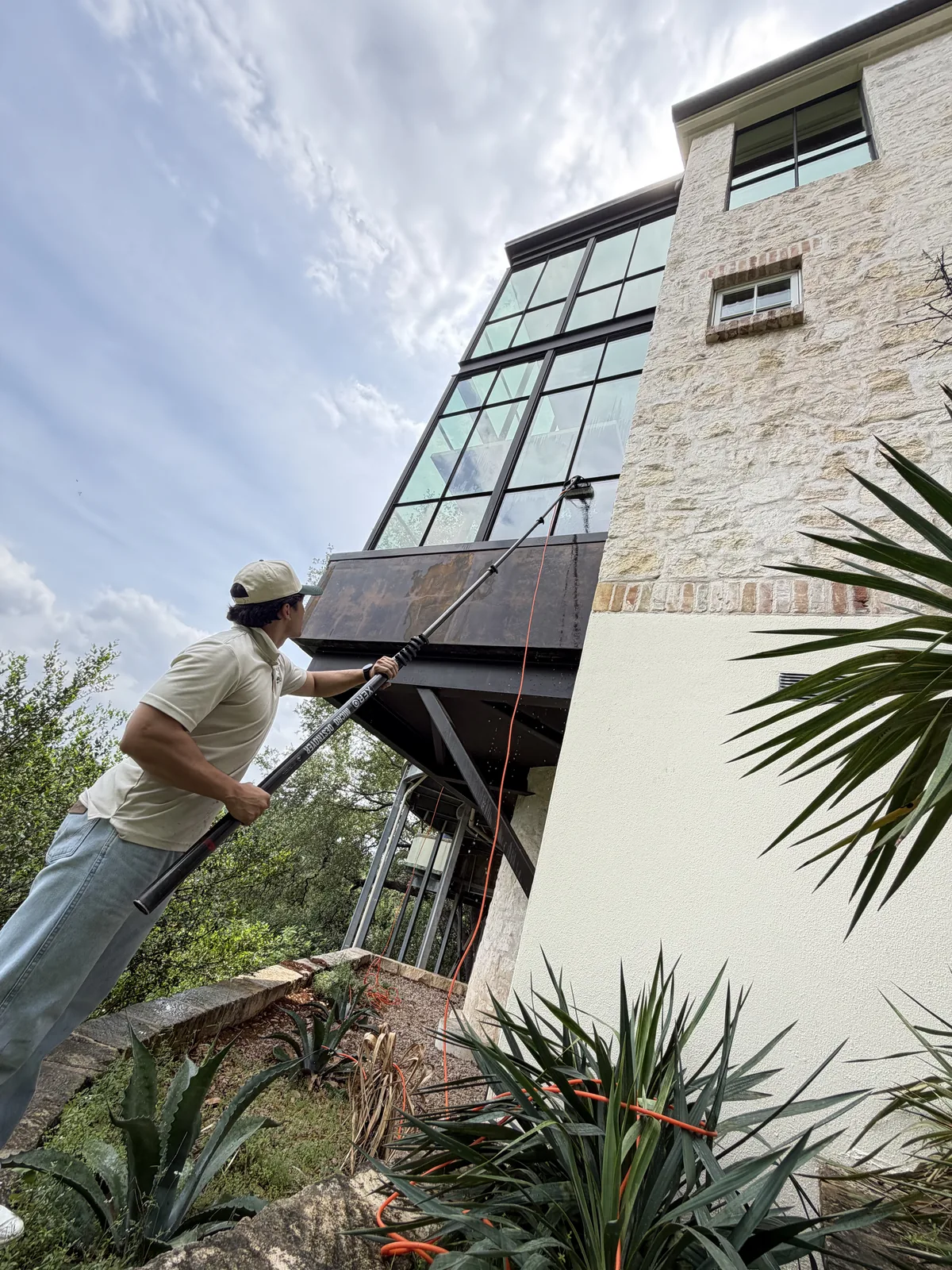
Also think about height. Upper-story windows aren't worth a ladder on uneven ground. Professionals clean second- and third-story glass from the ground with water-fed poles.
When should I call a professional for hard-water stains?
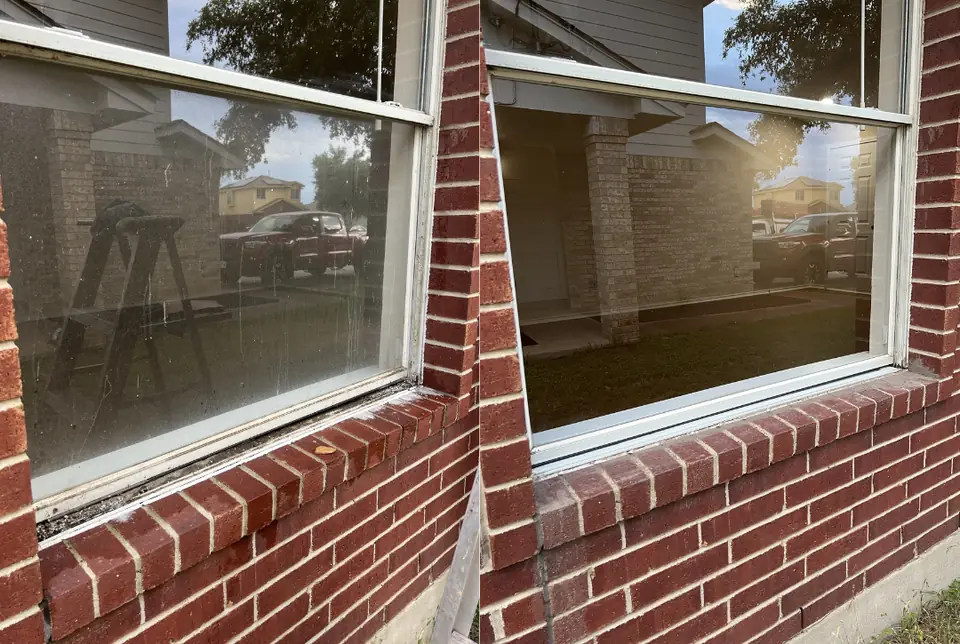
When spots don't come off with a mild acid, cover large areas, or sit on upper-story glass. Professional mineral restoration uses products and techniques made for heavy calcium and lime buildup that ordinary washing won't touch.
At Casa Care Window Cleaning, we treat heavy deposits with a dedicated mineral-restoration process that dissolves the buildup and restores clarity. Standard cleaning is part of every window cleaning. Heavy hard-water removal is an added treatment because it takes specialized product and time. If long-term etching has pitted the glass, we'll tell you honestly what's removable before we start, so you don't pay for something that won't work. Learn more on our residential window cleaning page, or see how it affects pricing in our Austin window cleaning cost guide.
How do I keep hard-water stains from coming back?
Keep hard water off the glass, and don't let what does land there sit for months.
- Adjust your sprinkler heads. This is the most important fix. Aim heads away from windows, lower the spray arc, or change the nozzle type near the house. Check again after any landscaping work.
- Water early in the morning. Less evaporation in full sun means fewer baked-on minerals.
- Don't hose down your windows. Rinsing glass with tap water is one of the most common ways homeowners create hard-water spots.
- Keep gutters flowing. Overflowing gutters send mineral-laden water down the glass. Gutter cleaning helps.
- Clean on a schedule. Regular cleaning removes minerals before they bond or etch. Most Austin homes do well with twice a year. Homes with sprinkler overspray often need quarterly cleaning. See how often to clean windows in Austin.
Why do professionals use purified water?
Because purified water has nothing in it to leave behind. Our exterior cleaning uses a water-fed pole system with purified, deionized water. With the minerals removed, the glass dries spot-free without towels or chemical residue. It's the same reason you rinse with distilled water at home: it's the minerals in the water, not the water itself, that leave spots.
Need help with hard-water spots?
Casa Care Window Cleaning removes hard-water stains for homes in Austin, West Lake Hills, Rollingwood, Tarrytown, Lakeway, and Bee Cave. We carry $2M in liability coverage, back exterior work with a 7-day rain guarantee, and hold a 5.0-star rating across 208 Google reviews. Get your instant quote in about a minute, or call or text (512) 522-4985 and mention the hard-water spots so we can plan for them.